 Lendings
Successfully repaying a personal loan requires more than good intentions — it demands a budgeting framework that accounts for the monthly payment alongside your existing obligations and lifestyle needs. The borrowers who complete repayment most smoothly are those who integrated the loan payment into a comprehensive budget before they ever accepted the offer.
The Foundation: Know Your Numbers
Effective budgeting starts with accurate knowledge of your income and expenses. Track every dollar that comes in and goes out for a minimum of 30 days before making any budgeting decisions. Include all income sources, fixed expenses like rent and insurance, variable necessities like groceries and fuel, discretionary spending, and existing debt payments. This baseline reveals exactly where your money goes and identifies opportunities to accommodate a new loan payment.
The 50-30-20 Framework Adapted for Loan Repayment
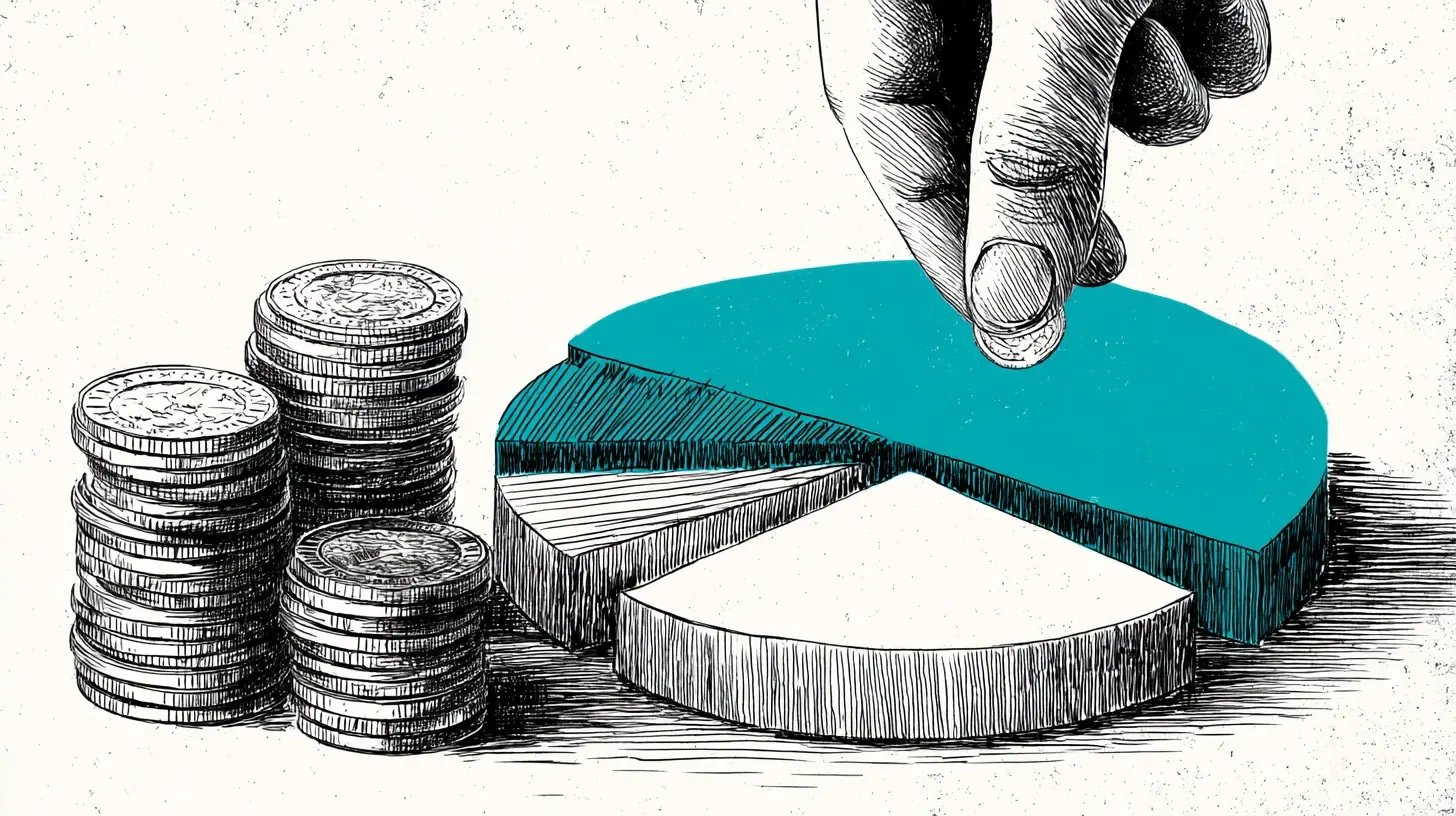
A useful budgeting framework allocates approximately 50 percent of after-tax income to needs, 30 percent to wants, and 20 percent to savings and debt repayment. When carrying a personal loan, the debt repayment portion of that 20 percent takes priority. If your loan payment exceeds what the 20 percent allocation allows, consider temporarily reducing discretionary spending in the wants category until the loan is repaid. This rebalancing is temporary and returns to normal once your obligation is fulfilled.
Automate Your Loan Payment
Setting up automatic payments removes the monthly decision point that creates risk of missed or late payments. Schedule the automatic withdrawal for the day after your primary paycheck deposits, ensuring funds are available. Treating the loan payment as a non-negotiable expense — similar to rent or utilities — establishes a mindset that prevents it from being deprioritized during months when other spending temptations arise.
Build a Payment Buffer
Financial advisors recommend maintaining a small buffer beyond your minimum loan payment in your monthly budget. This buffer, even as little as $25 to $50, provides flexibility for months when unexpected expenses reduce your available funds. It also creates the opportunity to make occasional extra payments that reduce your principal balance faster and decrease total interest costs over the loan term.
Avoid Lifestyle Inflation During Repayment
One of the most common budgeting pitfalls during loan repayment is increasing discretionary spending when income rises. If you receive a raise or bonus, directing even a portion toward additional loan payments accelerates your payoff timeline significantly. A $100 monthly raise directed entirely to extra loan payments on a $3,000 balance can shorten a 24-month loan by several months while saving meaningful amounts in interest charges.
Monthly Budget Reviews
Set aside 15 minutes at the end of each month to review how your actual spending compared to your budget plan. Identify categories where you overspent and adjust the following month accordingly. These regular check-ins maintain awareness, catch problems early, and keep your repayment trajectory on track. The small time investment pays dividends in financial clarity and repayment success.
The 50/30/20 Framework Applied to Repayment
The 50/30/20 budgeting framework allocates 50% of take-home income to needs (housing, food, utilities, transportation, minimum debt payments), 30% to wants, and 20% to savings and debt acceleration. A lending bear loan monthly payment fits into the 50% needs category, with any additional accelerated payments coming from the 20% savings category.
For a household earning $4,000/month after taxes: $2,000 needs (including ~$165 lending bear loan payment), $1,200 wants, $800 savings/acceleration. The framework's discipline lies in honest categorization — many discretionary expenses get mislabeled as needs, which crowds out savings. Borrowers who track actual spending against the 50/30/20 targets for 60 days typically discover meaningful expense categories they can compress without lifestyle impact.
Automating Repayment for Reliability
The single most impactful budgeting technique for loan repayment is autopay. Setting up automatic monthly payment for your lending bear loan eliminates the failure mode that derails most repayment plans: the missed payment caused by life getting busy. Autopay also typically qualifies you for a small APR reduction (0.25-0.50%) at many lenders.
Configure autopay for the day after your most reliable paycheck arrives. Maintain a buffer of one full monthly payment in the autopay account at all times — this prevents the catastrophic compound failure of an autopay attempt with insufficient funds. The behavioral discipline of maintaining the buffer is the entire repayment plan; once it is in place, the lending bear loan effectively pays itself.
Building Acceleration Into Your Budget
Beyond minimum payments, the budgeting question becomes how to direct any additional cash flow toward accelerated payoff. The most effective approach is the "found money" rule: every windfall (tax refund, work bonus, gift, side-hustle income) goes 100% toward the lending bear loan principal. Found money typically arrives without being mentally allocated to specific expenses, making it ideal for debt acceleration.
A second effective approach is the round-up strategy: round every minimum payment up to the next $50 or $100 increment. A required $166 payment becomes $200, with the extra $34 applied to principal. The extra $34/month does not significantly impact household budgets but reduces the total loan term by 4-6 months on a typical 24-month lending bear loan.
A Real Budget Built Around Lending Bear Repayment
Consider a household with $4,200 take-home monthly income that just took a $3,000 lending bear loan for transmission repair. The loan terms: 24-month installment at 14% APR, monthly payment $144. Applying the 50/30/20 framework: $2,100 to needs, $1,260 to wants, $840 to savings and debt acceleration.
Their actual budget breakdown: $1,250 housing (rent + utilities), $400 groceries, $150 transportation (gas + insurance), $144 lending bear loan payment, $50 phone, $80 internet, $26 other minimum debt = $2,100 needs. Discretionary spending budget: $1,260 (dining, entertainment, subscriptions, clothing, personal care). Savings/acceleration: $200 emergency fund building, $240 retirement contributions, $400 lending bear acceleration = $840.
The $400 lending bear acceleration on top of the $144 minimum reduces the payoff timeline from 24 months to approximately 13 months. Total interest paid drops from $462 to roughly $240 — a $222 savings. The trade-off is that during the 13-month acceleration period, the household has $400/month less available for other goals. Some households would prioritize the savings target instead and accept the longer payoff timeline.
The right balance depends on individual circumstances. Households with weak emergency savings or no retirement contributions should typically build those before accelerating debt paydown. Households with strong financial foundations can prioritize debt acceleration for the guaranteed return equal to the loan's APR. The 50/30/20 framework provides the structural discipline; the specific allocation within "savings and debt acceleration" reflects each household's priorities.
Building the Buffer for Autopay Reliability
One overlooked element of budget-driven repayment success is the autopay buffer. The buffer is the amount maintained in the autopay checking account at all times — ideally one full monthly payment plus a margin for typical bill timing. For the $144 lending bear loan payment, a $200 buffer is generally adequate.
The buffer protects against the catastrophic compound failure that occurs when an autopay attempt hits insufficient funds: a missed lending bear loan payment, a NSF fee from the bank ($35), a late fee from the lender ($25-39), and a credit-bureau reportable delinquency if the situation persists past 30 days. The total cost of a single failed autopay can exceed $100 plus credit-score damage. Maintaining the buffer eliminates this risk entirely for a one-time deposit of $200 that essentially never gets touched.
Common Questions About Smart Budgeting for Repayment
What is the 50/30/20 budgeting framework?
50% of take-home income to needs (housing, food, utilities, transportation, minimum debt payments), 30% to wants (entertainment, hobbies, dining), 20% to savings and debt acceleration. A lending bear loan monthly payment fits into the 50% needs category.
How much should I budget for lending bear loan payments?
The monthly payment should fit within the 50% needs allocation of your budget without crowding out essential expenses. If the required payment exceeds 10-15% of take-home income, the loan amount is probably too large or the term too short.
Should I set up autopay for my lending bear loan?
Yes. Autopay eliminates missed-payment risk and typically qualifies for a small APR reduction (0.25-0.50%). Maintain a buffer of one full monthly payment in the autopay account to prevent overdraft on the payment day.
What is the 'found money' rule?
Direct every windfall (tax refund, work bonus, gift, side-hustle income) toward extra lending bear loan principal payments. Found money typically arrives without being mentally allocated to expenses, making it ideal for debt acceleration.
Can I really pay off a lending bear loan faster?
Yes. Even small extra payments compound meaningfully. Rounding up your monthly payment by $34-50/month typically shaves 4-6 months off the payoff timeline and saves hundreds in interest. The round-up strategy works well because it's small enough not to strain your budget.